The Moon I Watched as a Child — and Why I Now Plan My Life Around It
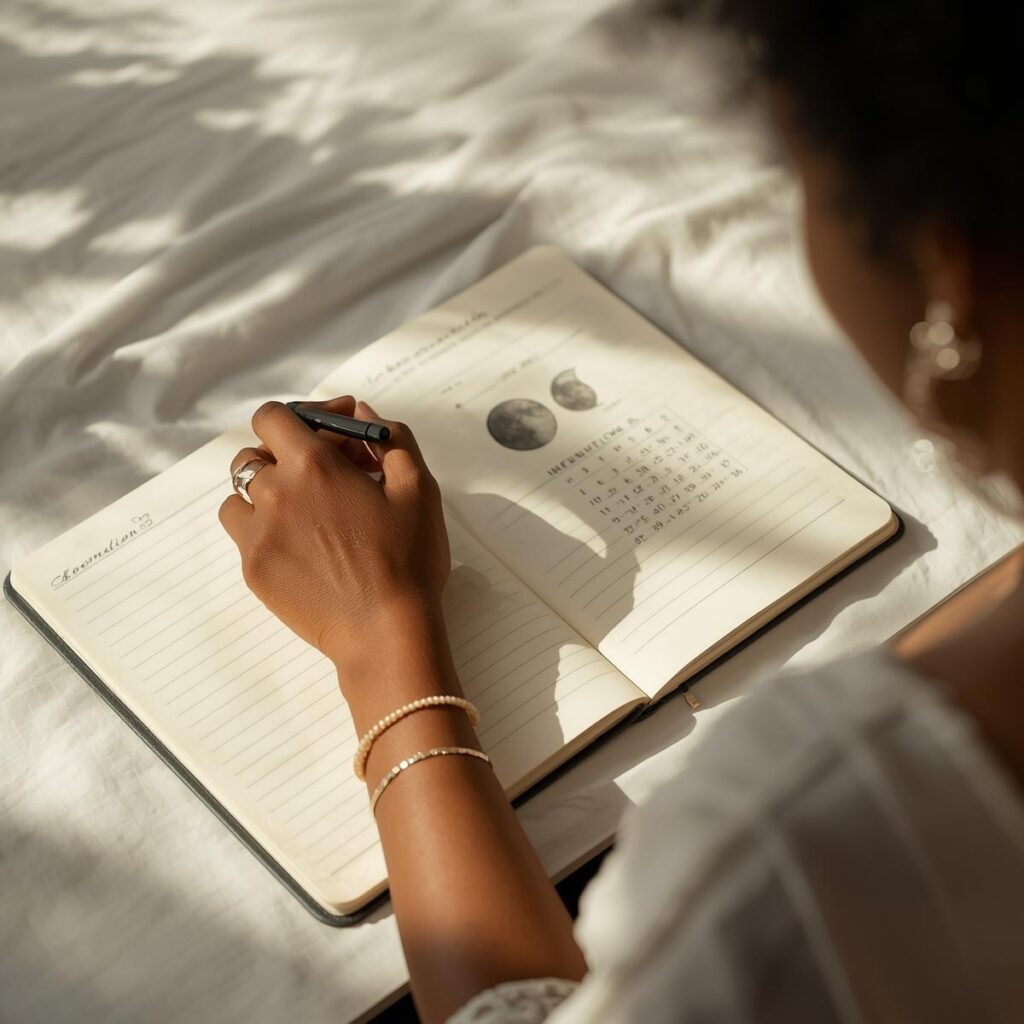
Moon self-care journaling began for me long before I understood what it was.
When I was a child, the moon felt like magic pinned to the night sky. I would stand quietly on the balcony late at night, watching it for long minutes, imagining that one day I would reach it, turn around, and see Earth from above — smaller, calmer, and finally understandable.
Back then, I didn’t know anything about lunar cycles, self-care, or journaling practices. I only knew one thing: during the full moon, I felt more. More emotions. More thoughts. More restlessness. A strange mix of inspiration and inner tension I couldn’t explain.
Years later, I realized that wasn’t imagination. It was awareness.
The moon governs tides, natural rhythms, and biological cycles. The human body is composed of more than 60% water, which makes the connection between lunar movement and human experience not symbolic, but physical. Scientific discussions referenced by organizations such as NASA and research published through the National Institutes of Health explore how lunar cycles influence Earth’s systems, circadian rhythms, and human sleep patterns.
And yet, most of us live as if every single day requires the same energy, the same output, and the same emotional bandwidth.
We plan our lives in straight lines — in a world that is fundamentally cyclical.
This quiet disconnect is where burnout, confusion, and emotional overload often begin.
And this is exactly where moon self-care journaling enters the picture. If you want a structured approach to building sustainable self‑care rituals, explore our main Self‑Care for Women page — the foundation of all mindful practices on TrendPrime.
What Moon Self-Care Journaling Really Is (and What It Isn’t)
Moon self-care journaling is not fortune-telling.
It is not superstition, and it is not astrology used as an excuse to avoid responsibility.
At its core, it is a mindful planning and reflection practice that helps you align your intentions, emotions, and decisions with the natural rhythm of the lunar cycle.
Instead of constantly asking:
“What should I be doing right now?”
You begin asking:
“What does this phase support?”
That single question changes the internal dialogue. It replaces pressure with permission and urgency with awareness.
The lunar cycle consists of four main phases. Each phase naturally supports a different type of mental, emotional, and energetic work. When journaling is structured around these phases, reflection becomes easier, clearer, and far more sustainable.
New Moon: Setting Intentions Without Forcing Action
The new moon is quiet and introspective. Energy is lower, but clarity is high.
This phase is not meant for visible action — it is meant for direction setting. In your journal, the new moon supports:
- setting intentions rather than rigid goals
- exploring desires without expectation
- reconnecting with values and long-term vision
Many people instinctively try to launch projects during the new moon. In reality, this phase works best when you allow ideas to form without demanding immediate results. Journaling during the new moon creates internal alignment before external action begins.

First Quarter Moon: Meeting Resistance With Awareness
The first quarter moon is where intention meets reality.
This is the phase where motivation often collides with doubt, fear, or procrastination. Instead of pushing harder, moon self-care journaling invites you to observe what resistance is trying to communicate.
Writing during this phase helps you:
- identify mental and emotional blocks
- notice repeating patterns
- adjust direction without self-criticism
This is often the phase where people abandon goals. Not because they failed, but because resistance feels uncomfortable. Journaling through this discomfort builds self-trust and emotional resilience over time. Daily self‑care habits can make this process of meeting resistance feel more grounded and sustainable. For a gentle structure that supports your energy and consistency, explore 10 Daily Self‑Care Habits for Women — simple routines that help you stay balanced without burning out.
Full Moon: Emotional Clarity and Honest Reflection
The full moon represents culmination and illumination.
What has been building beneath the surface becomes visible.
This phase is especially powerful for:
- emotional release
- honest self-evaluation
- recognizing progress and truth
Research discussed by organizations like the Sleep Foundation frequently highlights changes in sleep quality and emotional sensitivity around the full moon. Journaling provides a grounded way to process heightened emotions rather than suppressing them or acting impulsively.
When emotions are acknowledged on the page, clarity follows.
Last Quarter Moon: Letting Go to Complete the Cycle
The last quarter moon is the most underestimated phase of the lunar cycle.
Nothing new is meant to begin here.
Instead, this phase invites release, reflection, and closure.
In journaling practice, this phase often focuses on:
- habits that no longer serve you
- emotional attachments rooted in fear
- projects or thoughts that are ready to be completed
Letting go is not failure. It is completion. Without this phase, cycles remain mentally and emotionally unfinished, creating a sense of stagnation.
Why Lunar Planning Works So Well in Modern Life
Modern culture glorifies constant productivity and perpetual forward motion.
The moon reminds us that rest, reflection, and release are essential components of progress, not obstacles to it.
Moon self-care journaling supports:
- reduced mental overload
- improved emotional awareness
- sustainable focus instead of burnout
This is why lunar planning is increasingly integrated into mindful living routines, creative workflows, and intentional lifestyle practices. The same philosophy is reflected throughout the mindful living content on TrendPrime, where alignment is treated as a foundation rather than an afterthought. These principles of alignment and mindful living are part of a broader self‑care system you can explore in depth on our Self‑Care for Women page.
How to Start Moon Journaling Without Overcomplicating It
You do not need elaborate rituals or spiritual tools.
You do not need prior experience or belief systems.
What you need is:
- honesty with yourself
- gentle structure
- a dedicated place to write
This is why many beginners choose a guided moon self-care journal printable. A structured format removes uncertainty and supports consistency, especially in the early stages.
Using a moon self-care journal PDF allows you to focus on reflection instead of wondering what to write, making the practice easier to maintain over time.
A Gentle Entry Point: Living One Lunar Week at a Time
If lunar journaling feels intriguing but overwhelming, starting small is often the most effective approach.
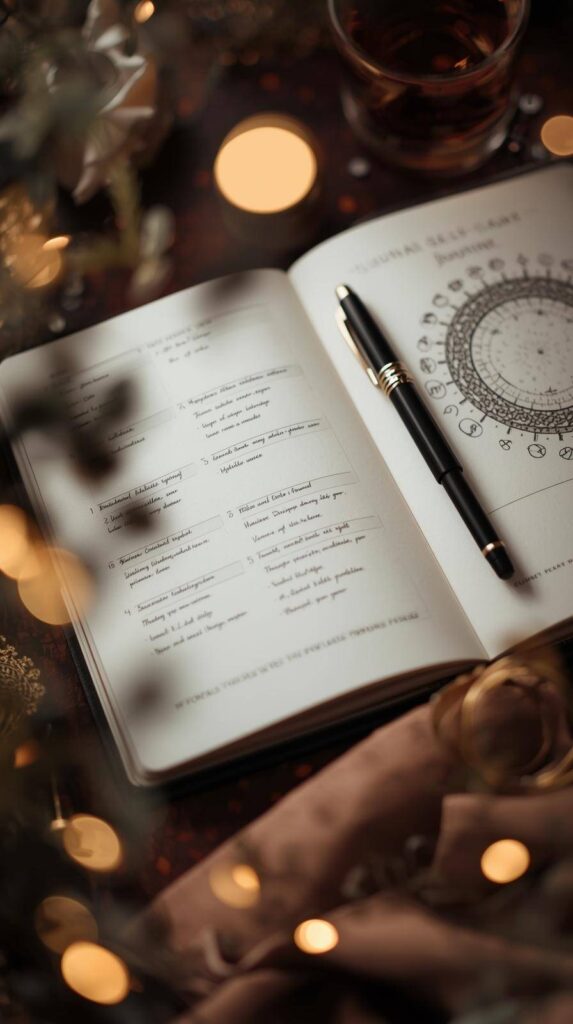
Many people begin with a 7-day lunar self-care starter guide, which introduces the rhythm gently and helps you experience the cycle in daily life before committing to a full journaling practice. This approach builds awareness without pressure and allows intuition to develop naturally.
This free lunar starter guide is available on the TrendPrime homepage as a mindful introduction to lunar planning and intentional living. If you want to integrate lunar journaling into a complete self‑care system, visit our Self‑Care for Women page — your central guide to emotional balance and intentional living.
One Last Look at the Moon
The moon I watched as a child is still there — constant, cyclical, unchanged.
What changed is my understanding.
I no longer try to force my life into straight lines. I pause. I write. I listen. And through that process, clarity emerges without urgency.
For those who prefer a tactile experience, the Moon Self-Care Journal is also available as a paperback edition on Amazon, offering the grounding sensation of writing by hand and slowing down with intention.